When you're aiming to teach your dog to stay focused in group settings, it's vital to start by understanding what might trigger their distractions. Establishing a strong foundation of trust and communication between you and your dog is the first step. Use positive reinforcement to encourage attentive behavior and practice basic commands in a variety of environments. As you gradually increase the level of distractions, observe your dog's stress levels closely. But how do you effectively manage these group dynamics without overwhelming your furry friend? There are key strategies you should consider to guarantee success.
Understand Your Dog's Triggers
Before you can teach your dog to stay focused, it's crucial to understand what triggers distractions in them. Every dog is unique, and their distractions vary widely. Some dogs might be drawn to other animals, while others could be more interested in people or sounds.
Pay close attention to your dog's behavior in different settings. Do they perk up at the sound of a car or the sight of a squirrel? By identifying these triggers, you can better predict when your dog's attention might waver.
Consider creating a list of common distractions for your dog. Take note of the environments where these distractions occur, such as the park, the neighborhood, or even at home. If your dog is distracted by other dogs, observe their interactions and note what specifically draws their attention. Is it a playful bark, a specific breed, or the mere presence of another dog?
Understanding these triggers allows you to anticipate situations where your dog's focus may falter. With this knowledge, you'll be better equipped to manage these distractions and guide your dog back to focusing on you during training sessions or everyday interactions.
Establish a Strong Foundation
A strong foundation is key to helping your dog maintain focus, and it starts with basic obedience training. Start with commands like "sit," "stay," and "come." These commands form the backbone of your communication with your dog. Consistently practice them in different environments, so your dog learns to follow them no matter where you are. This consistency helps build your dog's confidence and reinforces your role as the leader.
Next, guarantee your dog understands the concept of focus. Introduce a simple exercise where you hold a treat near your face and wait for your dog to make eye contact before rewarding them. This exercise teaches your dog that focusing on you is beneficial and rewarding. Repeat this exercise daily to strengthen the behavior.
Additionally, establish routines that provide structure. Dogs thrive on routine, and a predictable schedule can help your dog feel secure and less distracted. Set regular times for feeding, walking, and training sessions. This predictability helps your dog anticipate what's coming next, reducing anxiety and improving focus.
Finally, work on impulse control by practicing exercises like "leave it" and "wait." These exercises teach your dog to pause and focus, even when distractions arise.
Use Positive Reinforcement
Positive reinforcement is key to helping your dog stay focused.
Reward your dog with treats or praise whenever they exhibit desired behaviors, reinforcing their actions and encouraging them to repeat those behaviors.
Make sure to hold consistent training sessions to build a reliable routine and strengthen their focus over time.
Reward Desired Behaviors
Reward-based training is a powerful tool when teaching your dog to stay focused. When you reward desired behaviors, you're telling your dog, "Yes, this is what I want!" This encourages them to repeat these behaviors.
Start by identifying actions you want to see, like sitting calmly or maintaining eye contact. Once your dog performs these behaviors, immediately reward them with a treat, praise, or a favorite toy. The key is timing—make sure the reward comes right after the behavior to create a clear connection in your dog's mind.
Use high-value rewards that your dog loves, especially in group settings where distractions are plentiful. Keep sessions short and engaging to maintain your dog's interest.
Remember, consistency is vital; always reward the behaviors you want to reinforce. If your dog gets distracted or loses focus, gently redirect their attention back to you, and reward once they're focused again.
Patience is essential. Every dog learns at their own pace, so don't get discouraged if progress seems slow. Celebrate small victories and keep the atmosphere positive.
Consistent Training Sessions
Consistent training sessions play an essential role in helping your dog stay focused. By maintaining a regular training schedule, you reinforce behaviors and skills, making them second nature to your pup. It's important to set aside time each day, even if it's just 10-15 minutes, to work on commands and exercises. This routine helps your dog anticipate training times and remain engaged during sessions.
Using positive reinforcement is key during these sessions. Reward your dog with treats, praise, or playtime whenever they exhibit the desired behavior. This not only strengthens the learning process but also builds a positive association with the commands given. Make certain you're using rewards that your dog finds motivating, as this will encourage them to focus and perform well.
Keep sessions short and engaging. Dogs, like humans, have limited attention spans, so it's vital not to overwhelm them. Break tasks into small, manageable steps and celebrate each step completed successfully. This approach maintains your dog's interest and reduces frustration.
Remember to be patient and consistent. Consistency in training and rewards guarantees that your dog learns to focus in both quiet and group settings, leading to better behavior overall.
Practice Basic Commands
Before diving into teaching your dog advanced tricks, it's important to nail down the basic commands. Start with the fundamentals like "sit," "stay," "come," "heel," and "leave it." These commands form the foundation of your dog's training and help establish a mutual understanding between you and your canine companion.
Consistency is key, so use the same word and hand signal each time you practice. This helps your dog associate the command with the desired action.
Keep training sessions short and engaging, ideally about 5-10 minutes each. Dogs, especially younger ones, have limited attention spans, so brief intervals prevent boredom and frustration.
Always use positive reinforcement, such as treats, praise, or play, when your dog successfully follows a command. This encourages repetition of the desired behavior.
In group settings, practicing these basics guarantees your dog remains attentive to you rather than getting distracted by other dogs or people. It builds their confidence and reliability, making them easier to manage in more complex situations.
Gradually Increase Distractions
Once your dog has mastered the basic commands, it's time to test their focus by gradually increasing distractions. Start by introducing minor distractions during your training sessions. You might try turning on a television, playing soft music, or having a friend walk by at a distance. Keep an eye on your dog's response. If they stay attentive, gradually increase the complexity of distractions.
Next, consider practicing in different environments. Move from a quiet room to a busier area, like your backyard. As your dog becomes more comfortable, introduce more challenging distractions. Try training at a local park with other dogs and people around.
Remember, it's important to maintain a balance. Don't overwhelm your dog with too much too soon. If they seem distracted or stressed, scale back a bit.
Your goal is to slowly build your dog's ability to focus, even in the presence of various stimuli. Use positive reinforcement, like treats or praise, to reward them when they maintain focus despite distractions.
Patience is key. Each dog progresses at their own pace, so stay consistent and supportive as you gradually increase the level of difficulty. Your effort will pay off with a more focused and well-behaved companion.
Implement Consistent Training Sessions
To effectively teach your dog to stay focused, it's vital to establish regular training sessions. Consistency is key in reinforcing learned behaviors and ensuring your dog understands what's expected. Aim for daily sessions, but keep them short and engaging—about 10 to 15 minutes each. This prevents your dog from becoming bored or frustrated, which can hinder progress.
Choose a quiet spot for training, especially at the beginning. This minimizes distractions and helps your dog concentrate on the task. Gradually, as your dog becomes more adept, you can shift to locations with more stimuli to build their focus in varied settings.
Always use clear commands and maintain a positive tone to encourage your dog.
It's significant to end each session on a high note. When your dog successfully completes a task, reward them with treats, praise, or playtime. This positive reinforcement strengthens their desire to focus and perform well.
Keep track of your dog's progress and adjust your approach as needed. Remember, patience and persistence are vital. Consistent training not only improves focus but also strengthens the bond between you and your dog, making group settings more manageable.
Utilize Focus Exercises
To help your dog stay focused, start with eye contact training, which encourages your pet to concentrate on you.
Incorporate distraction management techniques to gradually increase your dog's ability to ignore distractions.
Always use reward-based reinforcement to motivate and acknowledge your dog's progress in these exercises.
Eye Contact Training
Eye contact is a crucial element in improving your dog's focus and communication skills. To start, choose a quiet environment with minimal distractions. Sit or kneel in front of your dog at eye level. Hold a treat near your face and wait for your dog to meet your gaze. The moment they make eye contact, praise them and reward them with the treat. This positive reinforcement encourages them to repeat the behavior.
Gradually increase the duration of eye contact before giving the treat. Aim for a few seconds at first, then extend the time as your dog gets comfortable. Use a command like "look" or "watch me" to associate the action with a verbal cue. Consistent practice will help your dog understand that eye contact is rewarding.
Practice frequently in short sessions, about five minutes each, to maintain your dog's interest. As your dog improves, introduce mild distractions, but make sure they can still focus. Reinforce successes with treats and praise.
This training not only enhances focus but also strengthens your bond. Your dog learns to rely on you for guidance, making them more attentive and responsive in various settings.
Distraction Management Techniques
When distractions abound, maintaining your dog's focus can be challenging, but with the right techniques, it's entirely achievable. One effective approach is to utilize focus exercises. Start by choosing a quiet space for initial training sessions. This helps your dog concentrate without overwhelming stimuli.
Once your dog gets the hang of it, gradually introduce mild distractions, like a toy or a treat placed at a distance. During these sessions, use a command such as "watch me" or "focus," and encourage your dog to make eye contact. Keep sessions short but frequent to maintain their interest.
Increase the difficulty by practicing in environments with more distractions, such as a park or a friend's house. Vary the scenarios to help your dog become accustomed to different settings.
Incorporate movement as a distraction management technique by walking around your dog while maintaining their attention. You can also try tossing a ball or waving a toy, making sure your dog stays focused on you instead.
Patience and consistency are key. Remember, each dog learns at their own pace, so adjust your methods as needed to guarantee progress.
Reward-Based Reinforcement
Rewards are a powerful tool in teaching your dog to stay focused. By using treats, toys, or praise, you can reinforce positive behavior and encourage your dog to pay attention https://alternativek9training.wordpress.com/ in distracting environments.
Start with simple focus exercises at home before gradually introducing more complex group settings.
Begin by practicing the "watch me" command. Hold a treat near your face and say "watch me." When your dog makes eye contact, reward them immediately. This exercise helps your dog learn that looking at you brings positive outcomes. Practice this frequently, gradually extending the time your dog holds focus.
Next, incorporate the "stay" command into your routine. Ask your dog to sit and then say "stay," stepping back a few paces. Use a treat to reinforce the behavior when your dog remains in place. Increase the distance and duration gradually, ensuring your dog remains focused on you despite distractions.
In group settings, keep treats handy to reward your dog for maintaining focus amidst chaos. Use a mix of verbal praise and treats to reinforce their attention.
Consistent practice will help your dog understand that staying focused results in rewards, making group settings more manageable.
Manage Group Setting Dynamics
In the midst of socializing your dog with other canines, managing group setting dynamics becomes essential for maintaining focus. First, establish clear boundaries. Dogs need to understand acceptable behavior, so set rules for interactions. Ascertain they know when playtime is over and focus is required. This helps in creating a structured environment where your dog can thrive.
Next, observe the group's energy. Dogs are highly perceptive and can easily get distracted by others' excitement. If the energy level rises too high, intervene by leading with calm and assertive behavior. You can redirect the group with a simple activity or command, bringing focus back to training.
Position yourself strategically. Stand where you can keep an eye on the group while maintaining a connection with your dog. By positioning yourself as a central figure, you'll reinforce your role as the leader, making it easier for your dog to focus on you.
Lastly, practice patience. Dogs learn at their own pace, and group dynamics can be challenging. Be consistent and positive, reinforcing good behavior with treats and praise. With time, your dog will learn to focus better in these settings.
Monitor Your Dog's Stress Levels
Just like people, dogs can experience stress, and it's crucial to monitor their stress levels to guarantee they stay focused during training. Recognizing the signs of stress in your dog is the first step. Look for indicators like excessive panting, yawning, drooling, or pacing. If your dog starts to whine, bark, or shows avoidance behaviors, these can also be stress signals.
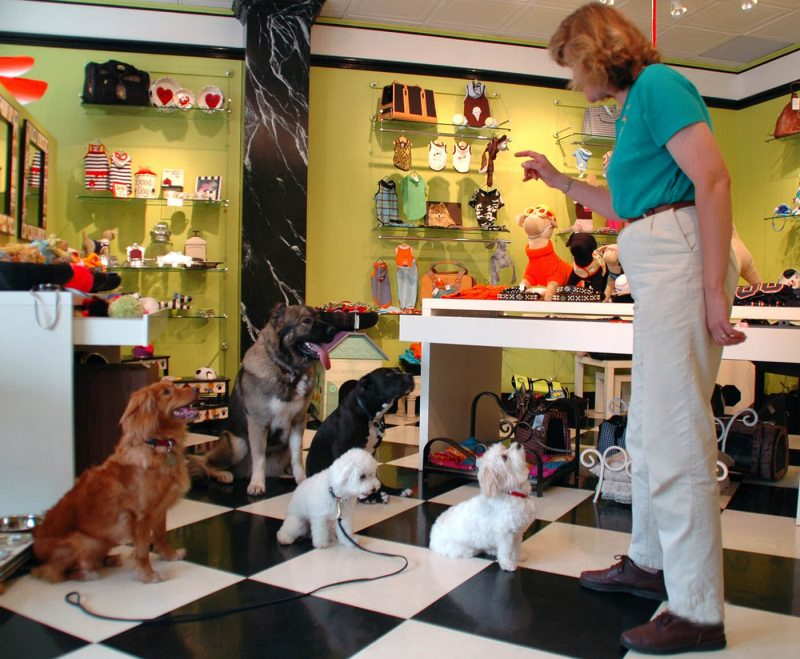
It's important to identify triggers that might cause your dog's stress. In a group setting, these could include unfamiliar dogs, loud noises, or an overwhelming number of people. Once you know the triggers, you can take steps to minimize their impact. For example, if your dog gets anxious around other dogs, create a safe distance where they can still participate without feeling overwhelmed.
Pay attention to your dog's body language. A tense body, tucked tail, or flattened ears are signs they're not comfortable. When you notice these signs, take a break. Give them some space, allow them to relax, and offer positive reinforcement when they calm down.
Consistently monitoring and addressing your dog's stress will help them stay focused and more comfortable in group settings.
Celebrate Progress and Achievements
While managing stress is important to maintaining your dog's focus, acknowledging their progress and achievements plays a vital role in their training journey. Celebrating small wins can boost your dog's confidence and motivation. When your dog successfully remains attentive in a group setting, immediately reward them with praise or a treat. This positive reinforcement helps them associate focus with positive outcomes.
Keep track of their accomplishments, no matter how minor they seem. Did they sit quietly for a few more seconds than usual? Did they resist distractions for the first time? These are notable achievements that deserve recognition. By celebrating these moments, you're reinforcing the behaviors you want to see more often.
Create a habit of ending each training session on a positive note. Even if your dog struggles, find something to celebrate. Maybe they showed improvement in a different area or simply stayed calm. Highlighting successes, even in challenging sessions, keeps their spirits high and encourages them to try again.